The Best Time to Visit Phu Quoc: What the Rainfall Record Actually Says
Updated September 25, 2026 · 6 min read

Almost every guide to Phu Quoc gives the dry season as November to April. That is not wrong so much as generous at both ends, and the difference between the generous version and the measured one is the difference between a good week and a wet one.
Here is what the island’s own rainfall record shows, month by month, in millimetres:
| Month | Rainfall |
|---|---|
| January | 27.7 mm |
| February | 27.2 mm |
| March | 61.0 mm |
| April | 148.2 mm |
| May | 280.8 mm |
| June | 381.9 mm |
| July | 419.2 mm |
| August | 485.6 mm |
| September | 473.6 mm |
| October | 354.2 mm |
| November | 163.5 mm |
| December | 59.1 mm |
The column adds up to about 2,880 mm a year – other sources put the island’s annual total nearer 3,000 mm – and the shape of it matters more than the total: the six months from May to October carry about five sixths of the rain. The hills in the north of the island are wetter still, with figures up to 4,000 mm.
Four dry months, two in-between months, six wet ones
Read the column and the season sorts itself out. December, January, February and March are the genuinely dry months. January and February are close to arid at under 30 mm.
April and November are the shoulder months, and they are the ones the brochure quietly rounds into the dry season. April carries 148.2 mm and November 163.5 mm – five or six times a January. You will still get plenty of sun in both, and you will also get afternoons that shut the sea down.
May through October is the southwest monsoon, and August and September are its peak at 485.6 mm and 473.6 mm. That is not drizzle; it is tropical rain in bursts, often with several clear hours around it.
The temperature is not a variable, so stop planning around it
This is the part that surprises people who are used to choosing a month by how warm it will be. Phu Quoc’s average daily highs run from 29.5 °C in September to 32.5 °C in April – a spread of three degrees across the whole year. Overnight lows sit between 23.0 °C and 25.8 °C. The sea stays somewhere around 26 to 30 °C throughout.
So there is no cool season and no hot season worth the name. April and May are the hottest and also the most humid-feeling; September is nominally the coolest and it is the month you are most likely to spend indoors. Choosing by temperature on this island tells you nothing. Choose by rainfall and sea state.
What each season actually does to your bookings
The reason any of this matters is that most of what Phu Quoc sells happens on the water.
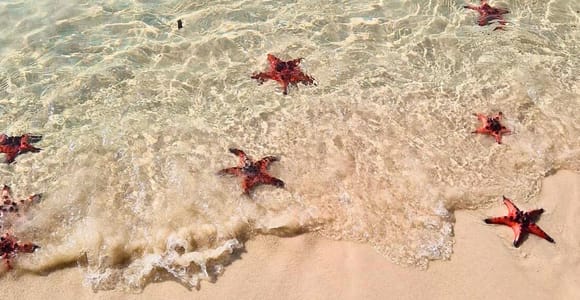
December to March. Flat seas and the best visibility. Operators put dry-season underwater visibility in the 10 to 20 metre range, which is when the snorkelling boats and the beginner dive trips are worth what they cost. The island-hopping category – 108 offers from €8.79 – runs at full strength, and the starfish on the north coast are only reliably visible in these clear months.
July to September. The months when trips get cancelled. Free cancellation is not a courtesy in this window, it is the thing you are buying; check that it is on the booking page rather than assuming.
April, May, October, November. Perfectly viable, and noticeably cheaper. Rain here tends to arrive in the afternoon, which makes a morning departure worth more than it is in January. If a tour offers a choice of start times in these months, take the early one.
One seasonal quirk worth knowing: the squid fishing boats, 27 offers from €14.94, advertise the sunset as seasonal rather than guaranteed – the listings say so themselves, and in the wet half of the year that is the honest description. The sunset cruise category holds 66 offers from €11.08, and the same caveat applies to all of them. Sunset here falls between roughly half past five and half past six depending on the month; this is ten degrees north of the equator, so the light goes quickly.
The crowd calendar is not the weather calendar
The four dry months are also the expensive, busy ones, and one date inside them is in a class of its own. Tet, the lunar new year, falls on 6 February 2027. The national holiday runs about a week around it, with the exact dates announced by the government each year.
Tet lands in the middle of the driest, calmest stretch of the year. That means the best possible conditions, domestic visitors from the whole country, full hotels and peak prices, all at once. If you are going anyway, book boats and the cable car day well ahead; if you are flexible, the two weeks either side of Tet give you the same weather without the crush.
So, when
If the sea is the point – snorkelling, diving, island hopping – come between December and March, and accept the prices.
If you want the island cheaper and quieter and can work around afternoon rain, come in late April, May, October or November, and book mornings.
If July, August or September are the only weeks you have, come anyway, but build the trip differently: one water day booked with free cancellation and moved when the forecast allows, and the rest of it on land. There is enough on this island that does not depend on the sea, and 485.6 mm in August is a reason to plan around the water rather than a reason to stay home.